Friday, April 24, 2009

More motion in the Mojave.

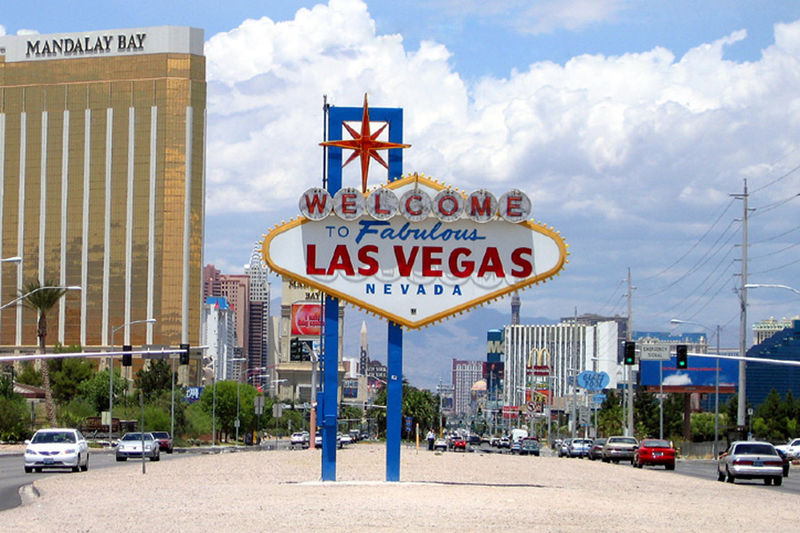
Another month, another trip to Las Vegas. This time to NAB. The best news is that the Tuner2 app for iPhone is now complete, so I got to test the release version across the desert. Being my third time this year (CES, CTIA, and now NAB), I have been able to compare the relative performance of Internet radio on my iPhone across the Mojave desert. Interestingly, each time has been better.

There is still a gap for about 40 miles after Ft. Irwin towards Baker on I-15. However, outside of that gap, it is 3G streaming all the way! I was able to tune into Radio Paradise up the Cajon Pass without a hitch. Starting south of Baker (well before the famous Zzyzx Road), I was able to jam all the way to Las Vegas with only minor breaks a couple times in the deepest parts of the desert. It appears that AT&T is constantly improving their network.

One caveat, (and maybe a minor bit of bragging), you won't get this kind of performance from just any Internet radio app on iPhone. You need one that has a persistent retry mechanism and one that has a high-quality MPEG-4 aacPlus decoder. With those two features, a 24Kbps stream sounds great through your speakers and rides through the bandwidth sags without audible rebuffering. Most of the iPhone apps that claim support for aacPlus (aka HE AAC, AAC+, etc.) use the open source FAAD2 decoder. That decoder has very poor performance and sounds terrible at low bit rates. (Personally, I don't think it even sounds that good at 64Kbps.) Since the Tuner2 iPhone app uses the commercial FhG decoder and the Modulation Index reconnect scheme, the audio quality and reliability are very high.

With all this talk about the desert, I don't want to forget to mention that the app still performs like a champ all around the LA metro area, delivering an experience superior to either satellite or HD Radio. Now that aacPlus is finally starting to show up in iPhone apps, car listening reliability will pass through the critical threshold for a broad audience. Pandora and AOL Radio still use 64Kbps MP3 on the go, so their audio quality in the car is marginal both on the decode and on the bandwidth usage. Once stations start to use 32Kbps MPEG-4 aacPlus, Internet radio in the car will really start to come into its own.

Thursday, January 29, 2009

IP Dead Zone: San Joaquin Valley

Another week, another chance to test 3G Internet radio outside of the metros. This time, I motored north and south on California's main artery, I-5. Given my experience in the Mojave, I was optimistic about the Central Valley. It is more heavily used and shoots like an arrow through flat farmland surrounded by hills and peaks. I thought that this corridor is worth at least the same level of 3G infrastructure investment as I-95 on the east coast.

I was wrong.

I expected spotty connectivity going through the Angeles National Forest beyond Santa Clarita. What I did not expect is that things got even worse past Grapevine.

After you get down into the Valley, the next three hours are pure IP hell, just enough tease to fill the buffer then go dark as soon as you start to enjoy the song. AT&T, Sprint, it didn't matter, both networks had very poor coverage. Someone suggested switching my iPhone to EDGE-only to keep swapping at a minimum, but that didn't help. So I hiccuped my way, teeth on edge, up what certainly feels like the fastest stretch of freeway in the USA.

Turning west at Los Banos, connectivity returned at Gilroy and performed beautifully for the remainder of my time all across the Bay Area.

The moral of the story: Internet radio in the car is ready for prime time in the metros, but not in the rural areas.

Sunday, January 18, 2009

Driving to Vegas with Radio Paradise


We are just about finished with our new iPhone app for Tuner2. (More on that interesting tidbit in a later post.) It performs flawlessly around the LA basin where AT&T 3G coverage is good. The question is, though, how would it perform in the middle of the Mojave? Since I had to head to CES anyway, I got the chance to find out.

Last year going to NAB 2008, I created a baseline for myself using the Sprint phone. Its performance was pretty spotty once you left the metro. The Tuner2 app on iPhone was a completely different story. I won't say it was flawless, but I was able to listen to Radio Paradise (24Kbps aacPlus) with only 1 or 2 hiccups going up the Cajon pass and all the way out to Fort Irwin/Yermo and the agriculture checkpoint.

After that, I had to take a break to make some phone calls. Similar to the Sprint experience, the iPhone was pretty spotty once I returned, but picked up again at Baker and was solid once more when I came into view of the Nevada state line. Driving around Las Vegas to and from the show, it was just as solid as "normal" broadcast radio. (Broadcast radio, BTW, crackles more than you think if you pay attention to it.)

It is interesting to note that the performance of the Tuner2 iPhone app is inverted from Sirius XM satellite radio receivers. In the urban areas, the scatter creates dead zones for sat radio (especially for Sirius, which seems to have a weaker ground repeater network.) I was in a rental car near Washington DC recently and the sat radio in the car went silent as I waited for the light to change under an overpass. In the desert, the lack of obstructions gives you good sat radio reception. For 3G (AT&T and Sprint alike) the urban areas are well covered and things get spotty when you head out into the desert or rural areas.

Of course, in the end there is no comparison since we spend most of our time driving in the metros and more importantly, the variety of what you can get via the Internet far eclipses the programming on satellite radio.

Friday, October 31, 2008

Streaming to iPhone, I guess I have to care

Technology purist, stand aside! Streaming radio to the iPhone is important.

Back before Apple released the 3G iPhone, I derided the attempts to stream to iPhone. In my defense, my criticism was justified at that time. However, the facts on the ground have changed and now I must sing a different tune.

Case in point, Radio NRI had been streaming for months using standards-based 3GPP format to Sprint and AT&T phones as an off-deck solution. The results were less than stellar and the percentage of total listeners using the mobile streams was negligible.

Then in July, AOL Radio released their AOL Radio app for iPhone. As of October, an estimated 10% of the listeners enjoying the Radio NRI streams on AOL Radio were on the iPhone. 10%! That is a huge percentage considering the relative market share of iPhone. Yes, iPhone shipments are surging, but they still form potential audience that is an order of magnitude smaller than the broader multimedia phone market. At street events this summer, people would walk up to the Radio NRI booth with their iPhone saying "I found you guys here, this is amazing, I was just listening to Bollywood Classic Hits in my car using my iPhone."

What makes the popularity of iPhone radio applications so surprising is that they are generally using MP3 to deliver their streams. In general, MP3 is way too fat for mobile streaming and the streaming protocol it uses is not at all suited for reliable listening. Nonetheless, iPhone users are eating it up.

This audience has two big things going for it. First, the iPhone is dead easy to use. Do a side by side of trying to tune into Tuner2.com on your Sprint multimedia handset (even on the lauded Samsung Instinct!) and then try to use AOL Radio on your iPhone. The comparison is like night and day. Using a dedicated radio app on an iPhone is much easier than navigating through your multimedia phone's clumsy UI.

Second, the iPhone user is motivated. They whole reason they bought the phone was to access the Internet, enjoy media, and to download custom apps. This motivation makes it natural that iPhone users would want to enjoy Internet radio on their iPhone. A perfect match.

So here I am, eating a bit of crow. To repeat the words of Stephen Colbert, "the free market has spoken." Internet radio on iPhone is a key audience for all broadcasters. Now they need to work to deliver iPhone apps that get beyond the crappy MP3 streaming and start delivering quality audio over reliable transports.

Stay tuned...

Thursday, October 30, 2008

AT&T's ulterior motive - 3G vs. WiFi


All hail! AT&T has given all the iPhone users free WiFi access inside their hotspot network at places like Starbucks. Pretty cool, huh?

Not so fast... While this may seem like altruistic behavior, it is just good business. 3G data is pretty darn expensive to deliver. If an AT&T customer with a dual-radio device, like an iPhone, is within range of their WiFi network, then it saves them a ton of cash to move that user onto the WiFi.

So, while it is definitely a nice capability for users, don't think AT&T is doing you a favor. They are just reducing their costs. On the other hand, if they suddenly enable VoIP over that free WiFi, the rules really would start changing.

Wednesday, July 30, 2008

Ford and embedded Bluetooth streaming

Even though this video is a blatant ad for Ford Focus, it nonetheless shows what I have been talking about. The built in stereo Bluetooth receiver allows you to establish a stream on your phone (assuming your phone has a data plan) and then play it back through the car speakers.

As a side note, it would be interesting to do some testing on the interaction between the low-quality of the Bluetooth codec (SBC) and low-quality streaming codecs like Windows Media audio. In any case, the buzz is that SBC doesn't quite cut it, so folks like APT, Kleer, and Qualcomm are creating alternative wireless solutions. Both APT and Qualcomm aim to work over Bluetooth transport, which, in my view, makes them more attractive.

Friday, July 25, 2008

Lessons from AM radio

Why isn't Internet radio more widespread? (both inside and outside the car.) I have heard a number of theories. Too many codecs, too many formats, lack of bandwidth in mobile, etc. However, all of these theories are actually details obscuring an underlying reality.

For Internet radio to become truly widespread, it needs to "just work." The consumer needs to be able to power on, turn the knob, and have good sound coming out. If they don't like what they are hearing, they need to be able to hit the seek button to find something more to their taste. That's it, it needs to be that simple.

Before all the technologists yell foul and complain that that Internet radio is too complex for this to happen, let's look at AM and FM radio. The consumer experience of AM and FM radio is exactly as I describe above, but a lot of moving pieces had to be fixed down before it could happen. AM and FM are complex, they just don't feel that way due to good standardization.

Although first broadcast in 1906, AM didn't become commercially viable in North America until standards were set for carrier amplitude, modulation frequency range, channel spacing, and overall carrier frequency ranges for receivers. This standard stood alone for 30+ years until FM arrived and presented another selection of standardized components which added up to a complete solution. As a result, over 80 years later, we can still turn on an AM radio, tune the dial, and enjoy the broadcasts. You don't need a different type of radio for every single station.

For Internet radio to reach the same robust level, we need a unified standard which covers connectivity, discovery, directory, transport, and playback. The good news is that the nature of the beast already gives us a standard for connectivity, TCP/IP and UDP. Now we need to get to the brass tacks of the remaining items.

Disovery: Internet radios need to have a kind of global UPnP, which makes it automatically aware of relevant directories. It may be as simple as a directory of directories maintained by ICANN, but that's just a quick guess. And the problem remains, who gets listed and in what order? This may be the most difficult part since it needs to be truly neutral for it to work across all vendors and broadcasters.

Directory: Internet radios need a standardized way to get a list of stations which are available. Also that list needs to have some kind of globally relevant set of sorting and grouping tags.

Transport: Once we know what streams are available and where they are, we need a limited set of ways to get access to them. HTTP "Shoutcast" is the most widespread transport method used today, but it doesn't do well in lossy environments like mobile/car. RTSP is used by 3GPP and in IPTV and works great for mobile, but it isn't widely used by today's Internet radio. Although the purists (and you know who you are) wouldn't like it, any standard will need to support both transports. We would also need to implement a standardized backchannel interface for services like Pandora, which takes user preferences into account.

Playback: Now that we have the stream unwrapped, we need to put it out over the speakers and on whatever display is available. That means we need an audio codec. Given its widespread use, MP3 is probably required here. However, the content fees put forward by Thomson coupled with the recent lack of clarity around MP3 patent ownership means that this could be an issue. MPEG-4 HE AAC v2 is the standard in mobile and is also used by Shoutcast. Given its open-standards nature, its bitrate efficiency, and clear patent pool, HE AAC v2 should also be fundamental. Beyond codec, the playback standard also has to have a fixed methodology for metadata presentation, including album art and even advertising.

The parts needed for a true Internet radio standard are nearly all off the shelf. Existing solutions can be quickly adopted or tweaked to match the needs. The only real barriers will be in compromise, cooperation, and will power. Once we come together and establish such a standard, then Internet radio can truly blossom, be free of the PC, and be as ubiquitous as AM & FM.